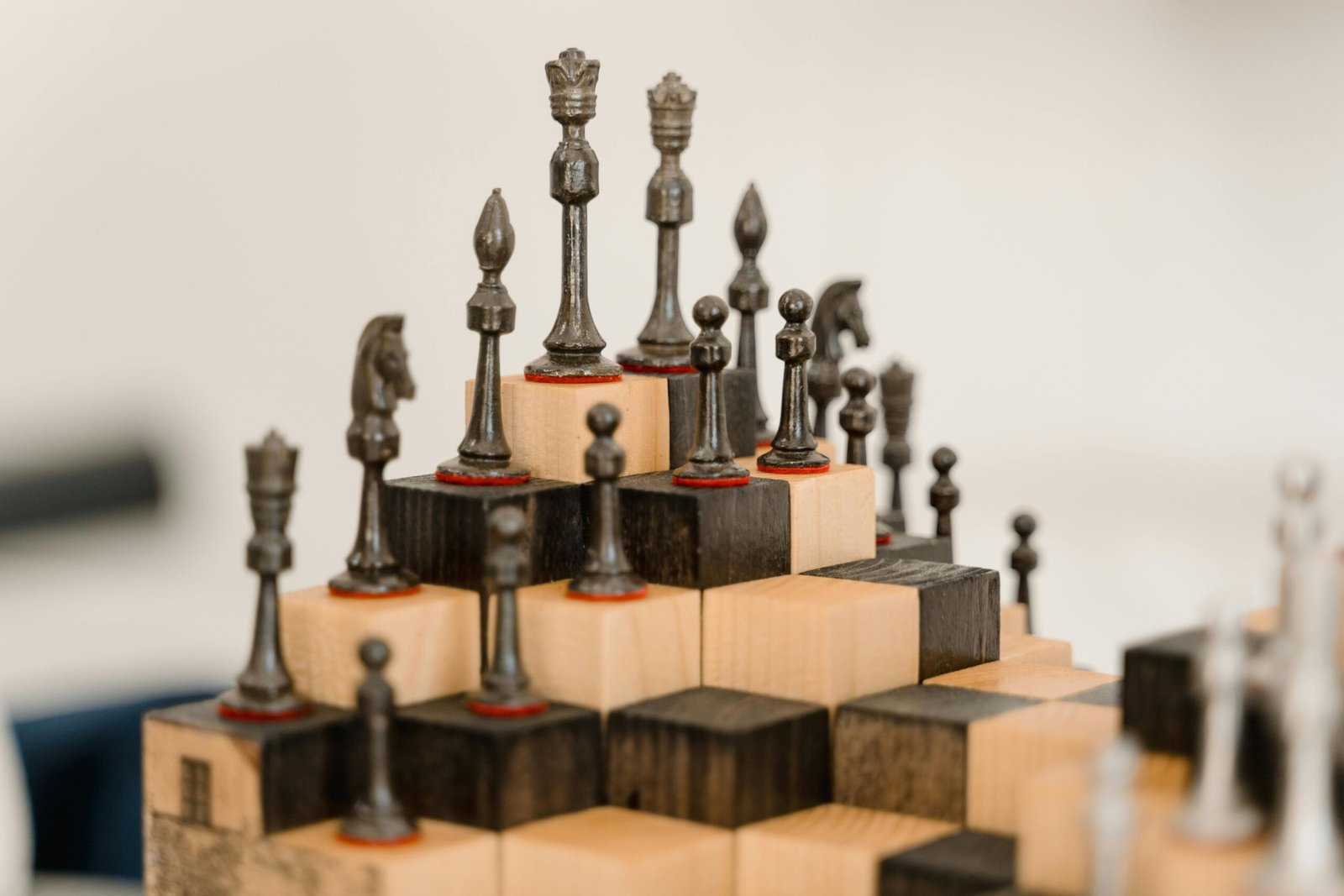
Many families and adult learners start from the true beginning — not knowing how the pieces move, what “check” means, or why castling exists. That’s completely normal. The mistake most programs make is rushing this stage. At White Knight Academy, we teach step-by-step: one live session per week (up to 4 per month), plus simple guided practice in between. To keep progress clear and motivating, we organize our online chess lessons into a 7-level curriculum — so students always know what they’re learning, why it matters, and what comes next.
Why Levels Matter for Beginners
“Beginner” can mean many things. Some students are learning piece movement; others already play games online but blunder pieces. A level-based system helps us keep chess classes for beginners comfortable and effective — especially in small groups — because students train with peers who have similar skills and speed of learning. This approach is common in established chess education frameworks that use step-by-step progression and skill checkpoints.
Chess, like love, like music, has the power to make men happy.
Siegbert Tarrasch

Our 7-Level Curriculum (Beginner → Advanced)
Level 1 — First Moves (Absolute Beginner)
Perfect for students who are brand new to chess.
Focus: board setup, piece names + movement, capturing, turns, check vs checkmate, basic rules and etiquette. We take time here until the student feels confident — no rushing.
Level 2 — Safe Play & Simple Checkmates
Now we build confidence to actually play full games without chaos.
Focus: piece values, “hanging pieces,” simple checkmate patterns, basic king safety, and a blunder-check routine (before every move).
Level 3 — Tactics Foundations
This is where chess starts to “click” for most beginners.
Focus: forks, pins, skewers, discovered attacks, double attacks, removing the defender — with short puzzle sets and clear explanations (not just solving). This stage is the engine behind most beginner improvement.
Level 4 — Opening Habits (No Memorization)
We don’t teach openings as long theory lines. We teach habits.
Focus: development, center control, king safety, and how to respond to unusual beginner moves. This makes chess classes online feel structured without overwhelming students.
Level 5 — Middlegame Plans & Strategy Basics
Beginners often ask: “What do I do now?” This level answers that.
Focus: improving pieces, creating simple plans, targeting weaknesses, basic pawn structure ideas, trading decisions, and calculation discipline.
Level 6 — Endgames & Technique
Endgames teach precision and reduce fear in simplified positions.
Focus: king activity, key pawn endgames, essential rook endgame rules, converting an extra piece/pawn, and saving worse positions.
Level 7 — Advanced Training & Competitive Prep
For ambitious students aiming for strong club play and consistent results.
Focus: building an opening repertoire, advanced tactics + calculation, deeper positional themes, structured game analysis, and practical tournament preparation.
How Students Move Up a Level
Progress is not tied to time. Each student moves forward after showing key skills in games and exercises. That’s why our model works well with one weekly session: the live class guides the learning, and short practice between sessions makes improvement stick.
What This Means for Membership
Our membership plans are designed around this curriculum — so you’re not just buying lessons, you’re buying a clear path: online chess coaching, guided practice, and progress tracking that shows real improvement over time.
If you’d like to join early testing, comment “BETA” and tell us: kid/adult + “Level 1 (brand new)” or your current experience.